

Environmental and Historical Interpretive Signage
Quiet Waters Park
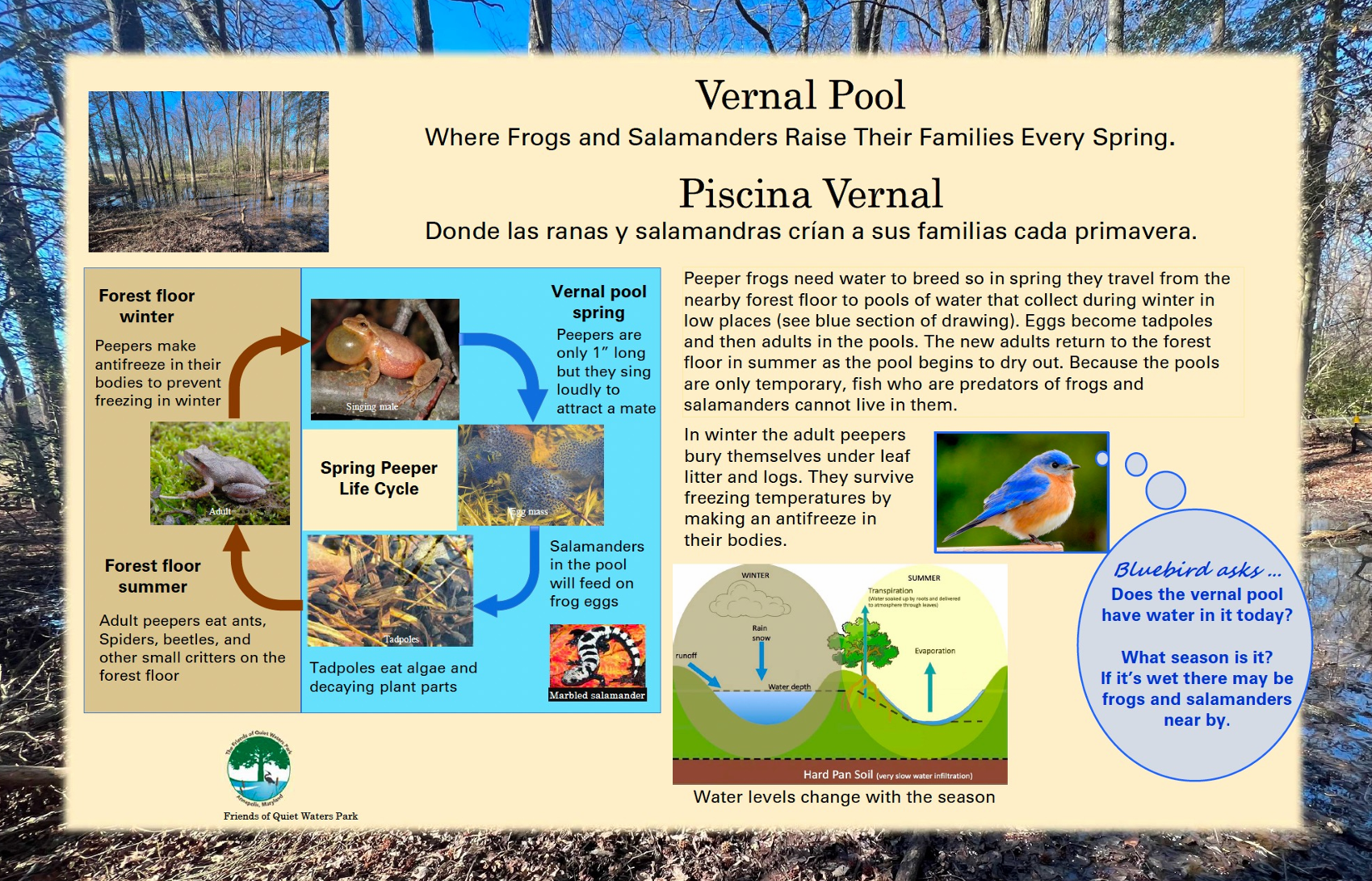
The History of this Vernal Pool: How it Came to Be
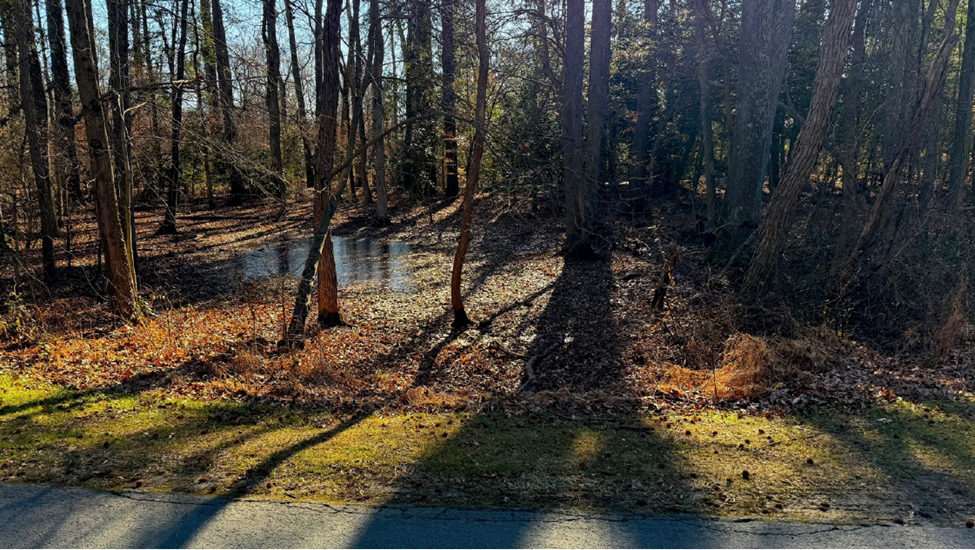
Prior to 1988, before road construction, this area might have been a wet forest.
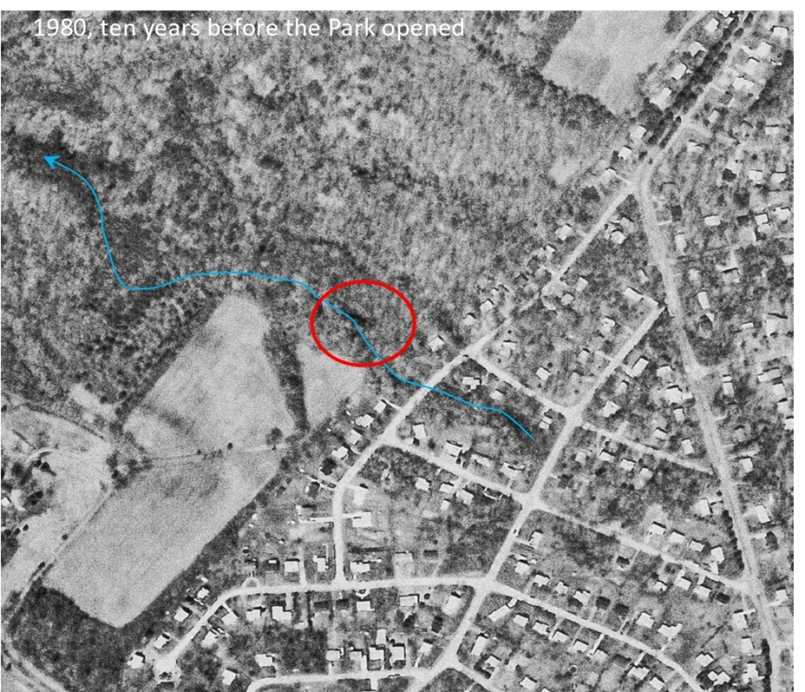
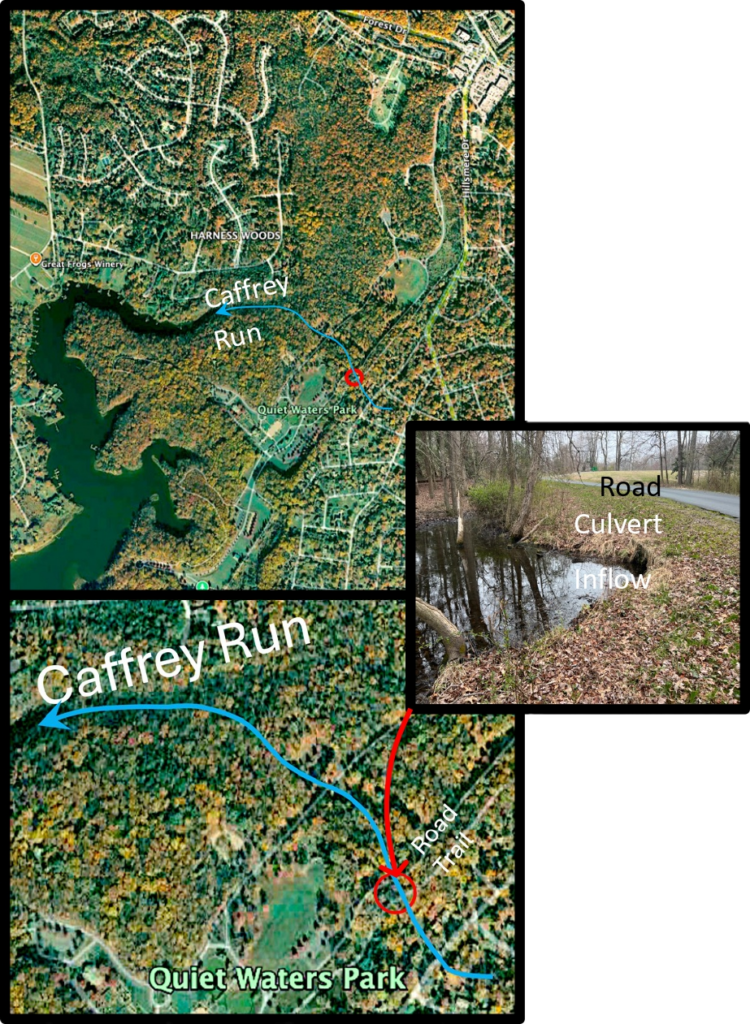
Red circle on this recent satellite image shows location of vernal pool between the trail and the road.
The blue line shows the flow of water from the Hillsmere neighborhood, into the vernal pool, flowing under the road and eventually into Caffrey Run and Harness Creek.
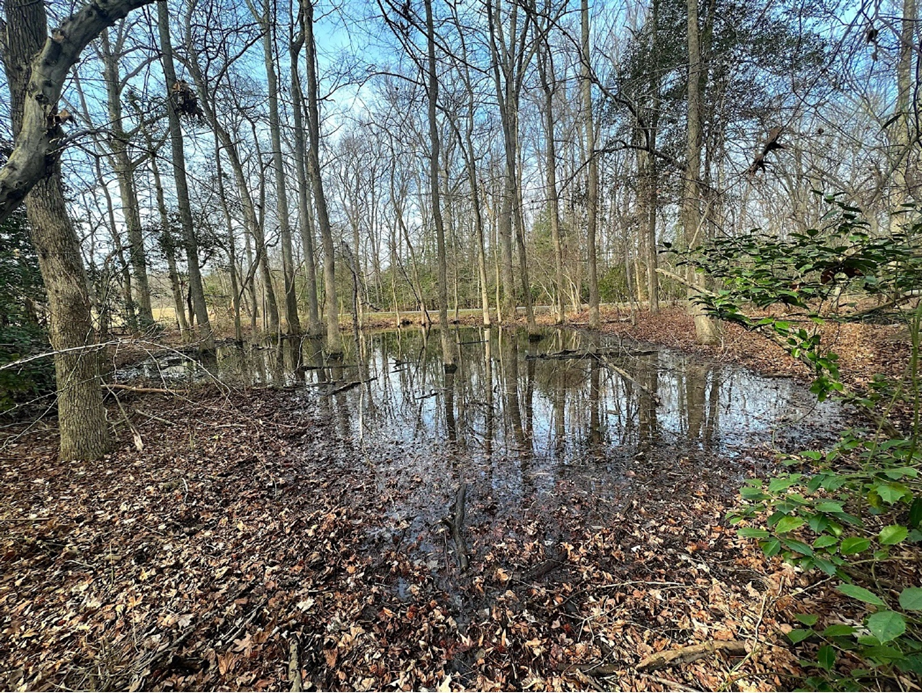
The road surface was built elevated above the surrounding area. A culvert was installed under the road to allow the runoff from Hillsmere to flow under the road and ultimately into Caffrey Run and Harness Creek. The inflow of the culvert (the outflow of the pool) is about >1’ above the surrounding ground surface causing a pool to form upstream to the road after prolonged rain. A layer of clay below the shallow soil of the pool is impermeable to water so the water in the pool can only flow parallel to the surface of this clay layer. In the late summer and fall water in the pool eventually dries up due to evaporation, transpiration, and lateral underground flow along its borders.
Surface runoff travels fast and can take with it sediment and pollutants that are delivered to Caffrey Run and Harness Creek. This vernal pool, though a product of human development, serves a beneficial service as a water storage system slowing surface runoff and therefore, erosion downstream.
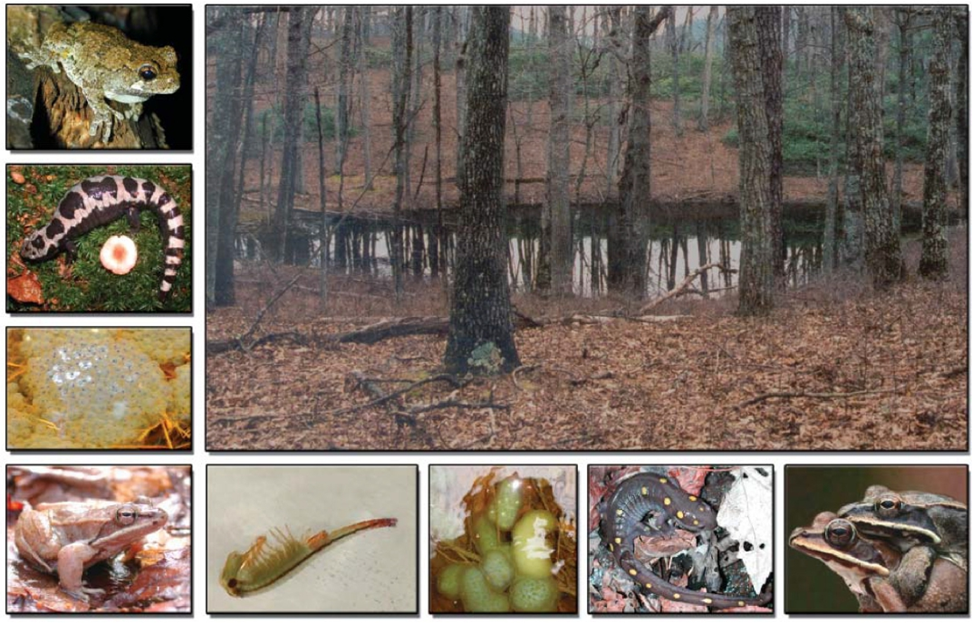
Another feature of the pool is that it creates new habitat for frogs and salamanders that depend on pools like these to breed. See references below for examples of the types of life unique to vernal pools
Other Sources of Information About Vernal Pools in Our Region
An Introduction to Mid-Atlantic Seasonal Pools: Click here for more Info
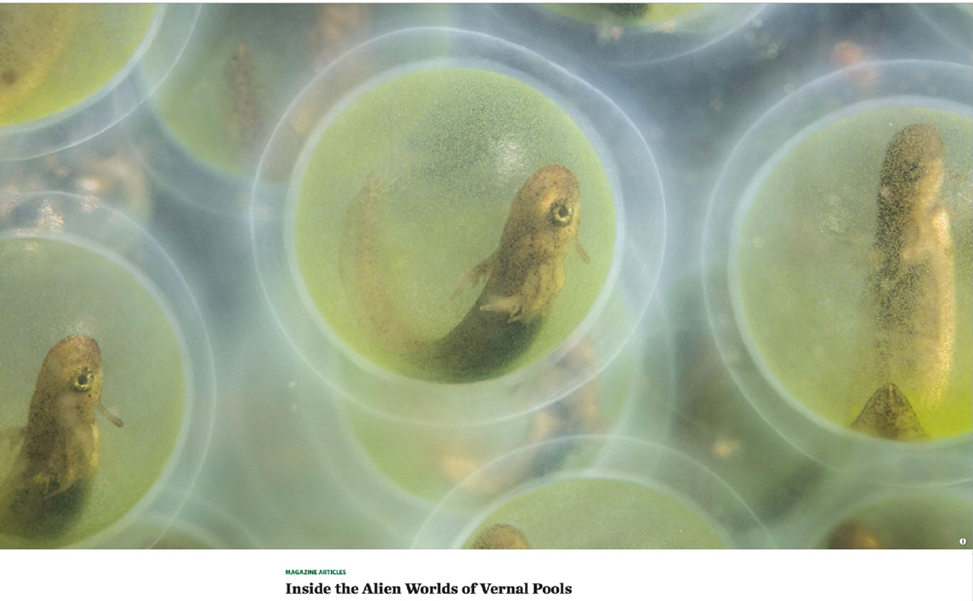
Explore the view of vernal pool below the surface in the beautiful images and video from Nature Conservancy: Birth of a Salamander
Other Sources of Information About Stormwater Flow
Click here to learn more about stormwater flow, its effects on wetlands and the Chesapeake Bay, and how to manage it.